
Introduction
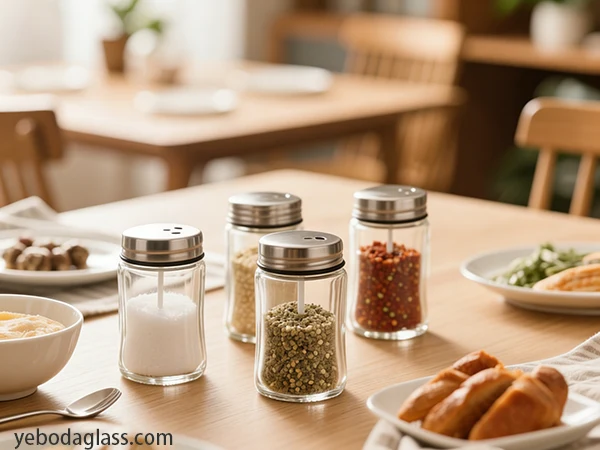
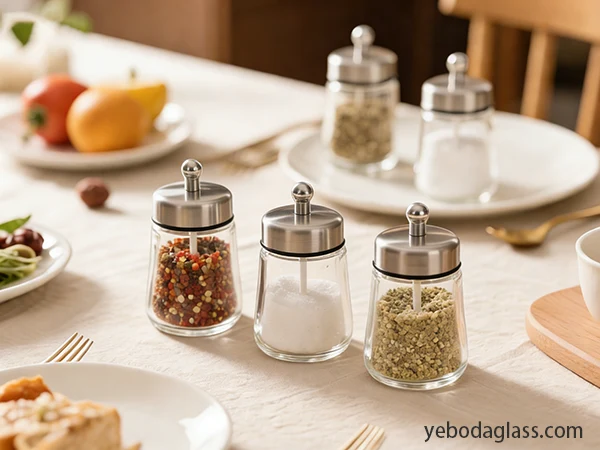
This report indicates the most important risks of collaborating with a spice jar distributor and offers a systematic framework of evaluation and suppression over world supply chains. It encompasses various packaging options involving spice jars, plastic containers and high-end glass jars, that include procurement, logistics, compliance and stability of long-term business. When brands purchase spice jars in large quantities, it is important to choose the appropriate spice jar supplier that can ensure the integrity of the products, manage the costs, and keep the operational sustainability in the unstable spice market. Among them, Yeboda glass spice jars are characterized by the uniformity of their walls, material of food grade, increased annealing, and inspections of quality. Yeboda is a more durable, and sealing functioning, and regulatory compliance spice jar distribution product, compared to most other offerings, which allows brands to minimize breakage, leakage, and recall risk and maintain a high shelf image.
Operational and Supply Chain Risk Working with a Spice Jar Distributor
The problem of managing relations with a distributor of spice jars is a kind of problem that has to be planned in advance to handle anomalies in operations which can lead to a disruption in the supply of spice jars and their quality.
Risk of Inventory Management of A Spice Jar Distributor
A lot of partners in the spice jars business find it difficult to strike a balance between inventory in many spice jars and SKUs. The result of poor forecasting, lack of integration, and visibility is usually a stockout or excess inventory, which raises storage expenses and production disruptions.
Logistics and Transportation Delays
The risks involved in the transportation of the delicate glass jars are port congestion, shortage of workers, inefficient routing, and carrier capacity limitations. Sluggish deliveries by the spice jar distributor will cause production to grind and increase the shortage on the bullwhip effect.
Production, Warehousing Capacity Constraints
A spice jar distributor can be limited in terms of capacity during seasonal peaks in demand. Lack of warehousing facilities, subcontractors or inability to customize products can create longer lead times on spice jars and lower a supply reliability.
Glass Jar Packaging and Palletizing
Glass jars purchased by a spice jar distributor should be well packaged. Best practices involve wrapping of individual parcels, use of void fillers, wrapping into a second box, reinforced cartons, tight palletization and clear fragile labeling to reduce transit damage.
Product Quality, Contamination, and Compliance Risks
This is because the distributor of spice jars has a core responsibility of ensuring uniformity in quality of spice jars and in this case, food-contact packaging.
Glass Jar Quality Flaws in Glass Jar Supply
Major problems include unequal wall thickness, micro-cracks where the stress of heating takes place, insufficient annealing, sealing cracks, and cosmetic cracks. These faults undermine the safety and shelfability of the spice jars.
State-of-the-art Quality Control Systems of Glass Jars
The major distributor partners of spice jars invest in AI-based visual inspection, spectral analysis, and fracture analysis, which identify defects at an early stage and increase the quality manufacturing of glass jars of various products.
Spice Jar and Food Contact Material Regulatory Compliance
EU, U.S. FDA and other regional regulations have to be adhered to. An effective distributor of spice jars will guarantee that the glass jars are distributed within the migration limits, documentation and third party certification.
Financially and Business-wise Viability
Supply continuity and long-term partnerships directly depend on the financial wellbeing of a spice jar distributor.
Financial Risk Indicators
Some of the warning symptoms are late deliveries, diminishing quality, problems with payment, high turnover, and poor communication. These signs usually are a precursor to the interference in the supply of spice jars.
Financial Measures to Be Monitored
The brands ought to consider accounts receivable aging, inventory turnover ratios, debt to equity, and operating cash flow to evaluate the stability of a spice jar distributor.
Economic Downturn Impacts
In hard times, spice jar distributors can have a more restricted credit, rising transportation expenses, and decreased capacity, leading to the danger of supply interruptions.
Intellectual Property and Confidentiality Risks
In a case of a spice jar distributor, the risks associated with intellectual property (IP) go much beyond the use of the logo or copying of labels. Brand name spice jars, exclusive glass jar designs, special finishes, and lock designs all are strategic resources that can make a difference between brands in a saturated market. Otherwise, such assets could be reused, not properly protected, or duplicated among other competing clients.
Design ownership and Mold Control
Among the most dangerous IP risk areas, there is the ownership of molds. A distributor of spice jars and regulator of molds in custom glass jars has a legal or even operational entitlement to reuse designs similar to the specific design unless the contractual specifications outline exclusivity. To avoid design dilution and dependency on supplies, brands must make sure that the clauses of mold ownership, storage rights and destruction are properly written.
Trade Secrets and Technical Specifications
In addition to what custom eye can see, trade secrets like composition ratios of glass, tolerance of wall thickness, parameters of annealing, and performance standards that allow sealing need to be kept highly secret. To reduce the chances of leaks, a professional spice jar distributor must restrict internal access to sensitive information, apply secure documentation systems, and educate the employees about their confidentiality requirements.
Contractual Implementation and Legal Protection
Powerful legal systems are necessary in the process of contracting a spice jar distributor. There is protection in non-disclosure agreements, non-compete clauses, audit rights, and post-termination restrictions which are enforceable. In the case of international distribution of spice jars, clearly outlined jurisdictions and alternate dispute resolution methods are of particular interest to enable IP rights to be established on an international level.
Geopolitical and Regulatory Compliance Risks
Any spice jar distributor in a cross-border operation is becoming increasingly affected by geopolitical turmoil and changes in regulations, which affects the reliability and cost framework of distributors. Supply chains can be disrupted dramatically without much spelling out due to trade policies, tariffs, sanctions and changing packaging regulations.
Cost Volatility, Tariffs, and Trade Disputes
Glass jar and packaging material tariffs may greatly raise landed costs of spice jars. One of the ways through which the resilient spice jar distributor can cushion these risks is through the diversification of the production destinations, tariff engineering strategy planning, and providing alternative material or lightweight glass jar designs that can reduce the exposure to duties.
Regulatory Compliance between Markets
Regulations on food-contact are different in different regions, such as U.S. FDA regulations, EU Framework Regulation (EC) 1935/2004 and new sustainability regulations like the EU PPWR. A competent spice jar distributor is vigilant in regulatory developments and keeps up with compliance records, and local market needs and variations will be modified to fit local market demands in the specifications of spice jars.
Supply Chain Recovery In Face of Geopolitical Pressures
Shipping routes, availability of insurance, security of payments as well as lead times can be influenced by political instability. Seasoned spice jar distributor partners invest in contingency plans, multi-path logistics plans, and online visibility plans to ensure continuity of spice jars even in case of unfavorable situations.
Due Diligence Model in the Discovery
To choose the appropriate spice jar distributor needs a planned, continuous due diligence instead of a supplier inspection. Due diligence safeguards the brands against operational and compliance troubles, as well as reputation losses.
Standard Criterion of Risk Assessment
Strong evaluation framework must encompass financial stability, production capacity, quality management systems, compliance with regulations, ESG performance and reliability in the past. In the case of glass jars, the defect rates, inspection technologies and breakage controls should be paid special attention when the activity of the spice jar distributor is considered.
Continuous Evaluation and Monitoring Technologies
Technology is beginning to play a key role in the modern due diligence. Supplier management systems, AI risk rating, and real-time performance indicators enable brands to keep track of the performance of the spice jar distributors, predict in advance, and act in advance as the situation unfolds.
Strategic Value of Long-term partnerships
Instead of distribution which is treated as a transactional operation, dominant brands see their spice jar distributor as a strategic partner. The long-term partnership enhances accuracy of forecasting, ability to customize, prepared to comply and general resiliency of the supply chain of spice jars and glass jars.
Conclusion
The collaboration with a distributor of spice jars is a wise choice that will directly affect the quality of the products, their compliance with the regulations, their cost management, and their brand image. Intellectual property, geopolitical, financial stability, and operational execution are risks that are there and can be dealt with under the right systems. Through strict due diligence, clear contractual safeguards, and deployment of reliable spice jar distributor partner networks that can manage the complex aspects of global operations, brands can turn the distribution risk to competitive advantage. The distributor of spice jars selected is not only the distributor of quality and reliable spice jars and glass jars of the high quality, but also contributes to the sustainable development and success in the market in the long run.


 EN
EN  FR
FR  DE
DE  IT
IT  ES
ES  CS
CS  PT
PT  NL
NL  PL
PL  TR
TR  AR
AR  KO
KO  JA
JA  ZH
ZH  RU
RU  HU
HU