
Introduction
Choosing a dependable milk bottle vendor is no longer a matter of convenience in the highly competitive dairy and beverage industries, it is a strategic decision which has a direct effect on the company’s stability, cost-saving, compliance with the law, and brand equity. The bulk buyers have to deal with numerous challenges, starting with the unstable prices of the raw materials to the tightening of rules concerning sustainability, and, therefore, supplier reliability is what gives most of the advantage. This report presents a comprehensive framework to help understand the requirements of bulk buyers, recognize risks associated with milk bottle procurement, and measure the operational, financial, and strategic value that a reliable milk bottle vendor brings. There is a special focus on the role of glass milk bottles and high-quality glass bottles in the premium and sustainability-oriented markets.
Bulk Buyer Landscape and Milk Bottle Demand Profiles
Core Buyer Segments in the Milk Bottle Market
- The need for milk bottles on a large scale is common to various industries, which differ in functional, regulatory, and branding aspects of their requirements:
- Dairy producers and farms that comprise industrial processors as well as local farm-to-table brands
- Food processing facilities that make yogurt, cream, and dairy-based beverages
- Private-label manufacturers and co-packers, that require the provision of customized packaging
- Institutional food service providers, e.g., schools and hospitals
- More beverage brands, e.g., plant-based milk and functional drinks
The decision of a qualified milk bottle vendor is instrumental across these segments in whether or not packaging operations will continue to be stable during times of fluctuating.
Material and Design Requirements
Bulk buyers typically evaluate milk bottles based on three core criteria:
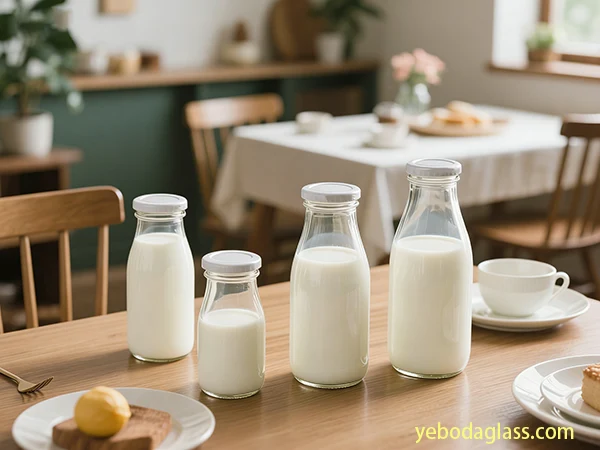
- Material integrity: Glass milk bottles are preferred for purity, reusability, and premium positioning. Plastic alternatives (HDPE, PET) dominate cost-sensitive applications
- Volume flexibility: From single-serve formats to gallon-scale containers
- Closure compatibility: Metal caps, screw caps, swing tops, and foil seals
A professional milk bottle vendor must demonstrate capability across these variables while maintaining consistency.
Current Challenges in Bulk Milk Bottle Procurement
Supply Chain Volatility
Packaging supply chains are increasingly exposed to:
- Raw material shortages
- Fluctuations in production costs caused by changes in energy use
- Trade restrictions and transportation bottlenecks
These disruptions have made bulk buyers, who do not have firsthand experience with vendors’ contingency plans, quite uneasy about relying on their vendors.
Manufacturing and Logistics Constraints
Limited capacities, delayed shipments, and disruptions in logistics are frequently causes of:
- Production stoppages
- Unfulfilled delivery schedules
- Increased emergency sourcing expenses
That is why bulk buyers are turning to long-term collaboration with a resilient milk bottle vendor rather than spot purchasing.
Vendor Reliability as a Strategic Asset
Beyond Delivery: What Defines a Reliable Milk Bottle Vendor
Reliability is a concept that goes far beyond the mere accuracy of shipping. A milk bottle vendor, reliable in all respects, is characterized by his/her/its strength in:
- Production capacity planning
- Quality assurance systems
- Open and honest communication
- Risk mitigation and being ready for compliance
Early-Stage Vendor Advantage Example
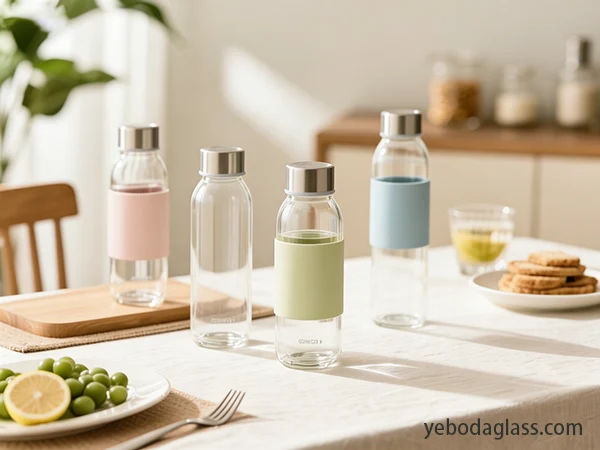
Within the glass milk bottles segment, some established vendors illustrate how operational maturity, strict quality control, and consistent supply performance can reduce procurement risk for bulk buyers. For example, Yeboda, as a specialized milk bottle vendor, is recognized for its focus on durable glass bottles, standardized manufacturing processes, and alignment with food-grade safety requirements—attributes that bulk buyers often seek when evaluating long-term supplier fit.
Quality Control and Compliance Expectations
Manufacturing Standards for Glass Bottles
A qualified milk bottle vendor must enforce multi-stage quality inspection, including:
- Raw material validation
- Dimensional tolerance checks
- Stress and thermal resistance testing
This is particularly critical for glass milk bottles, where defects can lead to breakage, leakage, or contamination.
Regulatory Alignment
Some of the compliance requirements are the following:
- Food and drug administration (FDA) or European Union (EU) food contact regulations
- ISO 9001 quality management system
- Traceability and documentation
Non-compliance with these regulations puts the risk of bulk buyers being subjected to recall of goods, penalties, and loss of their good name.
Strategic Importance of a Reliable Milk Bottle Vendor for Brand Value
One of the crucial factors which not only makes an indispensable milk bottle vendor instrumental for long-term market positioning but also helps in brand perception forming is the role of such vendor. Packaging in dairy and beverage industries is not just an ordinary container—it is the first visual appeal of quality, safety, and operational competence. By acquiring glass milk bottles or other quality glass bottles from a dependable vendor, both the brand and the end consumer benefit from strengthened trust and lowered brand risk.
Brand Consistency and Consumer Confidence
Consistency in packaging is a must for each production batch. Differences in bottle thickness, bottle clarity, or closure functionality can affect customer trust very quickly and that trust can be lost completely. A reliable milk bottle vendor provides the assurance that the dimensions of the bottles will be stable, the wall thickness uniform, and the sealing performance could be predicted, all of which help brand loyalty not only in retail stores but also in the institutional sector.
Shelf Presence and Market Differentiation
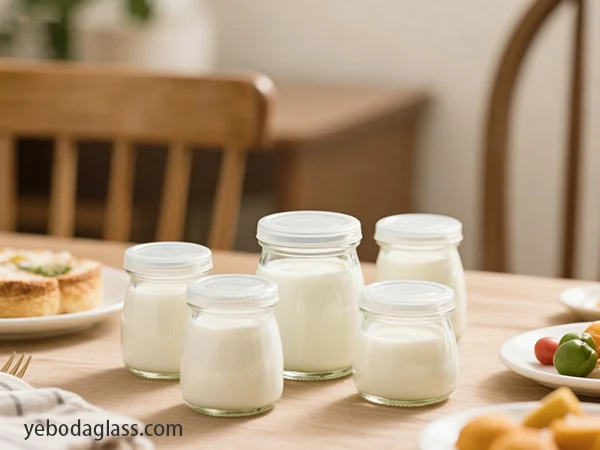
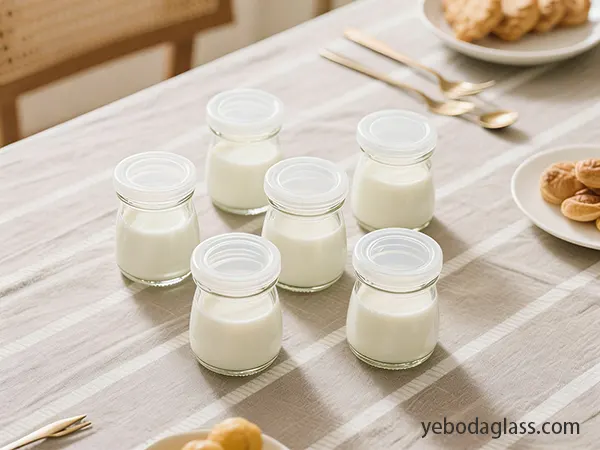
Packaging is the most important tool for a product in competitive retail environments and that is how the product “speaks” to a customer. Glass milk bottles not only offer the product the best look to the customers on the shelf through transparency, weight perception, and overall quality but also through their visual and tactile is most appealing. Brands having access to an expert milk bottle vendor can take advantage of unique features, beveling, or proprietary forms to innovate their products while still achieving the maximum output of production.
Sustainability as a Competitive Lever
Nowadays customers start to value more and more brands who are environmentally friendly which is also one of the terms of their purchase. Glass bottles which are reusable and glass milk bottles which are recyclable are a perfect match with circular economy. A sustainability-driven milk bottle supplier could be a means for a brand to meet the expectations of regulators, ESG commitments, and consumer demand without compromising the performance or cost control.
Risk Mitigation and Vendor Selection Frameworks for Bulk Buyers
It is not possible simply to choose the best milk bottle vendor by comparing the prices. Bulk buyers shall create frameworks for deeper inspection of the operational side of the companies, quality assurance, and long-term compatibility.
Comprehensive Vendor Due Diligence
A certified milk bottle vendor should provide documentation proving that it abides by food-contact regulations, has implemented quality management systems, and that raw materials are sourced in a traceable way. The visits to production—especially for glass bottles—give the buyers a chance to discover how defect monitoring, annealing, and resistance to breaking are handled.
Contract Design and Performance Safeguards
Contracts concluded with a strategic milk bottle vendor shall include clear SLAs, defect tolerance thresholds, delivery KPIs, and escalation procedures. Long-time mutual understanding between parties may bring not only a more stable price, less exposure to raw material price changes, but also vendor’s motivation to keep on improving.
Supply Chain Resilience Planning
By taking the right steps, buyers can lower the chances of disruptions in their operations in an effective way. One of the ways of doing this is by verifying if their supplier has stocks of backup molds, alternative furnaces or regional logistics that they can use when they face a challenge. Sellers who have anticipated potential threats and have solutions ready to tackle them are less likely to be the victims of abrupt shortages, transport delays, or changes in regulations.
Strategic Risk Control and Vendor Selection Optimization
Choosing a trustworthy milk bottle vendor ought to involve more than just looking at the unit price or the production capacity. Bulk buyers need to employ a well-organized and data-driven framework that evaluates not only the operational resilience but also the quality consistency and the long-term risk exposure of the vendor. In an environment that is characterized by supply chain volatility, regulatory pressure, and sustainability demands, vendor selection is a strategic function going to be like a transactional task.
Risk-Based Evaluation Criteria for a Milk Bottle Vendor
A great milk bottle vendor must exhibit the production stability, quality assurance, logistics reliability, and compliance readiness. Customers, through their purchasing decisions, give more importance to vendors who can provide not only glass milk bottles but also other glass bottles with standard specifications and at the same time have the material shortages and transportation disruptions covered in their contingency plans.
To facilitate objective decision making, procurement teams normally use a weighted evaluation matrix which shows how the different vendors compare with each other in terms of critical performance indicators.
| Evaluation Dimension | Key Assessment Points | Strategic Impact |
| Production Capacity | Output scalability, backup lines, mold availability | Ensures stable supply of glass milk bottles |
| Quality Control | ISO systems, defect rate, batch traceability | Reduces waste and recall risk |
| Logistics Reliability | Lead time accuracy, regional warehousing | Improves delivery predictability |
| Compliance & Safety | Food-contact standards, audit readiness | Protects regulatory compliance |
| Sustainability | Recycled content, energy efficiency | Enhances brand positioning |
Translating Vendor Data into Procurement Decisions
By evaluating each milk bottle vendor with respect to these criteria, the decision-makers will be in a strong position to pick one that would be a long-term partner rather than the one which can only provide a short-term fulfillment. This method is of great importance when dealing with the sourcing of glass bottles. This is because the tooling investment, breakage risk, and quality tolerance aspects of the process call for suppliers’ higher discipline. The presence of a well-structured evaluation model not only helps in reducing procurement risks but at the same time increasing negotiation leverage and supply chain resilience.
Technology Enablement and Process Innovation
Technology adoption is creating a wide gap between average suppliers and best-in-class milk bottle vendors. The latter use advanced manufacturing and digital tools to become more reliable, transparent, and responsive.
Digital Quality Control and Automation
Top-tier milk bottle vendors have automated inspection systems that help them identify dimensional defects, stress fractures, or surface imperfections in glass milk bottles. With these systems, human error is reduced to a minimum while throughput and consistency are significantly increased.
Data Transparency and Predictive Planning
The use of ERP systems, real-time inventory tracking, and predictive analytics enables a milk bottle vendor to forecast demand changes and make production adjustments well in advance. For bulk buyers, such a transparency means shorter lead times and more accurate production planning.
Digital Twins and Process Optimization
In order to forecast the wear of a mold and energy consumption, to name a few, advanced milk bottle vendors are turning to digital twin technology. The ultimate goal of these simulations is to help the company move from reactive maintenance to preventive maintenance thus, by doing that, stabilize the supply and lower the defect rates which are the two benefits that buyers receive.
Long-Term Partnerships and Strategic Collaboration Models
Leading brands do not limit themselves to transactional sourcing but rather, they look for collaborative relationships with their milk bottle vendor that can bring them a sustained competitive advantage.
Co-Development and Packaging Innovation
One of the benefits of strategic collaboration is new product development in which, the partners create new glass bottles that meet the changing tastes of consumers e.g. by being of lightweight or refill- friendly. A proactive milk bottle vendor not only shares the technical insight but also actively participates in early product development stages thus, lowering the redesign costs and the delays of the launch.
Continuous Improvement and Cost Optimization
Long-term partnerships create the right environment for the efficiency initiatives to be undertaken together e.g. waste reduction, energy optimization, and logistics consolidation. As a result, the brand and the supplier can both improve their margins and at the same time, maintain the quality standards. Aligning growth objectives, setting sustainability targets, and drawing up an innovation roadmap are some of the ways in which a trusted milk bottle vendor acts as a buyer’s operations’ extension. This ensures that the packaging capabilities are always up to date with market demands, regulatory changes, and consumer expectations.
Conclusion
Choosing the best milk bottle vendor is a pivotal decision in a world where the situations are always uncertain and compliance requirements keep on increasing. Reliability, in fact, is the main factor that affects not only the continuity of the supply and cost control but also the brand perception, sustainability performance, and long-term competitiveness. Bargain buyers that carry out a vendor evaluation framework in a well-organized manner, put quality and resilience at the top of their value list, and choose to create supplier relationships based on trust will be the ones to have the greatest power to face the next market disruptions. Actually, the right milk bottle vendor will be the key to operational success and brand integrity whether one is sourcing premium glass milk bottles or bulk glass bottles.

 EN
EN  FR
FR  DE
DE  IT
IT  ES
ES  CS
CS  PT
PT  NL
NL  PL
PL  TR
TR  AR
AR  KO
KO  JA
JA  ZH
ZH  RU
RU  HU
HU