
Olive Oil Bottle Manufacturer Capabilities Strategic Overview
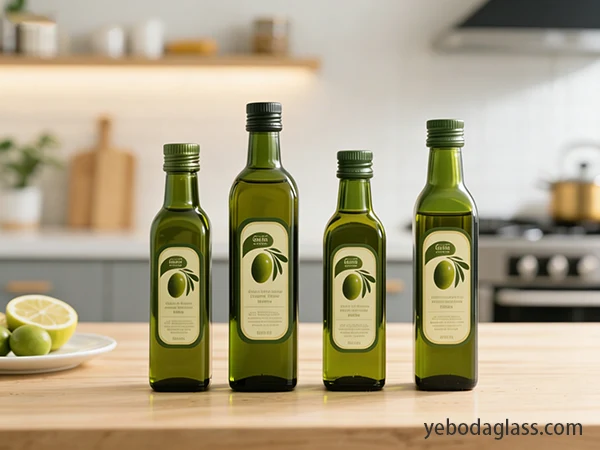
Competencies Core of an Olive Oil Bottle Manufacturer
The manufacturer of qualified olive oil bottles should prove to be skilled in:
- Glass formulation control
- Mold engineering
- Independent molding systems.
- Technology of surface treatment.
- Quality inspection systems
In the absence of these core competencies, the glass olive oil bottles can experience dimensional inconsistency, low light protection, and inability to seal.
Glass Olive Oil Bottles Market Motivation
Premiumization, sustainability regulation, and export compliance are encouraging the growth of the demands in unique glass bottles in the world of olive oil. Bottles of dark glass olive oil are linked to controlling the perception of authenticity and the maintenance of quality in consumers.
Why Olive Oil Bottle Manufacturer Selection Is Strategic?
Choosing the right olive oil bottle manufacturer impacts:
- Shelf-life performance
- Logistics efficiency
- Brand storytelling
- Cost stability
Poor manufacturer selection can lead to oxidation risks, packaging recalls, or inconsistent supply.
Customization Dimensions Offered by an Olive Oil Bottle Manufacturer
Customization is the central value proposition of a modern olive oil bottle manufacturer.
Bottle Geometry and Mold Engineering
An experienced olive oil bottle manufacturer offers:
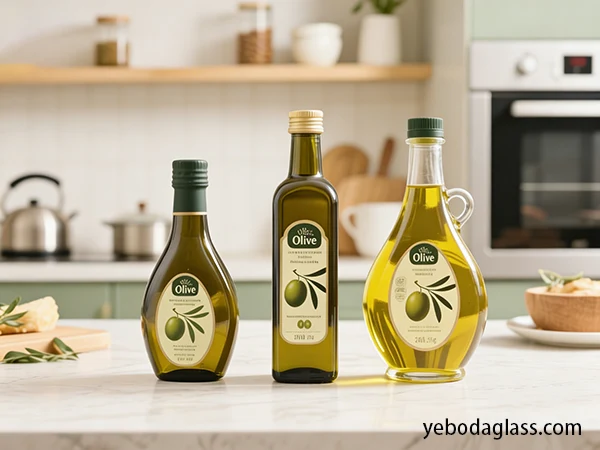
- Round, Dorica, Marasca, and custom profiles
- Custom neck finishes
- Weight optimization
- Ergonomic grip design
Complex 3D embossing or sculpted surfaces increase differentiation but require higher mold investment. Advanced mold precision ensures uniformity across high-volume production of glass olive oil bottles.
Material Composition and UV Protection
Glass color selection is crucial. A professional olive oil bottle manufacturer typically offers:
- Flint glass
- Antique green
- Deep green
- Amber
- Amber and deep green glass olive oil bottles block UV radiation, preventing photo-oxidation. Clear glass bottles, while visually attractive, require additional labeling or UV coatings.
Closure and Integrated Functional Systems
Closure systems provided by an olive oil bottle manufacturer include:
- Tamper-evident caps
- T-top cork systems
- Integrated pour spouts
- Smart NFC closures
Airtight sealing directly influences oxidation rate and product shelf life.
Tactical Goals that Power the Cooperation of Olive Oil Bottle Manufacturers
To realize strategic objectives beyond the provision of basic packaging, the manufacturers of the bottles are the collaborators of the producers of olive oil.
Premium Differentiation and Brand Identity
Glass olive oil bottles become brand ambassadors thanks to unique shapes, embossing, as well as surface finishes. High-end manufacturers use custom molds to strengthen authenticity discourses.
Shelf-Life Optimization
The main quality threat of olive oil is oxidation. An apt manufacturer of olive oil bottles incorporates:
- Dark glass protection
- Interaction with nitrogen flushing.
- Engineering of airtight closure.
These characteristics greatly increase freshness.
Sustainability and Lightweighting
Lightweight glass bottles reduce carbon emissions during transportation. Advanced forming technologies such as Narrow Neck Press and Blow allow weight reduction without compromising strength.
Market Segment Requirement and Adaptation of Olive Oil Bottle Manufacturer
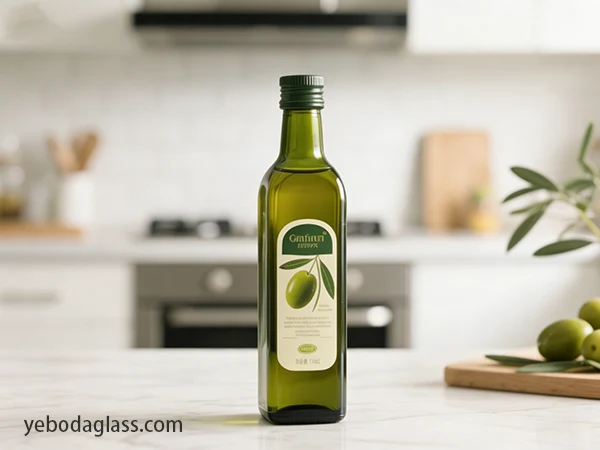
The concept of market segmentation is decisive in the determination of customization strategy of an olive oil bottle manufacturer. The technical, aesthetic, and regulatory requirements are extremely specific in terms of various channels of distribution and price levels, as well as geographic markets. A strong olive oil bottle manufacturer will then need to come up with solutions that will strike a balance between branding, functionality, scalability and compliance as it will fit into the operations of each segment. The world olive oil market can be loosely classified into luxury artisanal products, mass-market retailers, foodservice suppliers as well as export-oriented businesses. Every part requires a special formula of bottle geometry, glass color, bottle closure system, logistics, and cost structure optimization. Lack of design correspondence with the expectations of the segment can lead to diminished shelf appeal or poor preservation characteristics or poor production economics.
The needs of a segment (evaluated by a strategic olive oil bottle manufacturer) are measured in four dimensions:
- Presentation of product preservation.
- Brand differentiation and brand storytelling.
- Operational scalability
- Compliance with regulatory and logistics.
Long-term partnership value is determined by the capability to adjust on these parameters.
Premium and Artisanal Segment Requirements
The packaging in the high-end and quality goods segment serves as a literal extension of the brand name. Manufacturers within this category tend to focus on tradition, authenticity of the source, small production lots, and great sensuality. Consequently, the position of the bottle manufacturer of olive oil is changed to that of a design partner rather than a mass producer.
Key requirements include:
- Wholesale embossed logo molds or family crests.
- UV protective glass olive oil bottles made of antique green or deep amber.
- Super flint ornamentation and protection labeling.
- High-end bottle tops like wooden T-corks or fancy pourers.
- Frosting or hot stamping or silk-screen decoration.
To portray perceived value, bottle weight is sometimes deliberately increased among the artisanal producers. Nevertheless, the manufacturer of the olive oil bottle is also required to ensure small size of the structure but at the same time ensuring the maximum distribution of the wall thickness to prevent excessive waste of materials. Small to medium quantities of production need flexible MOQs and accurate levels of quality in this segment. Minor dimensional variation can compromise the label alignment or high-value shelf display. Thus, the quality of mould and defects inspection should be higher than the industry standards.
Mass Retail Segment and Cost Optimization
By contrast, mass-market retail brands are cost-efficient, scaled in production and uniform in shelves. The manufacturer of the olive oil bottle to this segment concentrates on the preset designs like Marasca and Dorica forms of this bottle, which can be used with automated filling lines and high-speed labeling systems.
Critical factors include:
- Glass engineering of lightweight to lower the shipping cost.
- Pallet optimization and stackability.
- Regular neck finishes on automated capping.
- Glass olive oil bottles that are dark green so as to protect against oxidation.
- Price rivality as a result of economies of scale.
In this case, the manufacturer of the olive oil bottle is forced to use high production lines that have small tolerance. The automated bottling systems can be easily derailed by such minor inconsistencies resulting in expensive downtime. Moreover, sustainability reporting is a requirement that is frequently placed by retailers. In this respect, mass-market producers are more and more demanding recycled content of glass and carbon footprint reports of their olive oil bottle manufacturer partners.
Foodservice and Export Market Adaptation
Foodservice environments—restaurants, hotels, catering operations—introduce different priorities. Durability, pour control, and refilling efficiency become central. The olive oil bottle manufacturer must design glass bottles that withstand frequent handling, washing, and transportation between kitchen and table.
Essential features include:
- Reinforced base thickness
- Anti-drip integrated pour spouts
- Wide-mouth openings for refilling
- UV-protective coloration
- Tamper-evident systems for hygiene assurance
Export markets add another layer of complexity. International compliance standards, transit durability, and traceability requirements become decisive factors. A globally active olive oil bottle manufacturer must ensure:
- FDA or EU food-contact compliance
- Heavy metal testing documentation
- Batch traceability coding
- Tamper-evident packaging systems
- Reinforced export carton structures
In long-distance shipping, vibration resistance becomes critical. Export-oriented glass olive oil bottles must pass simulated transit tests to minimize breakage rates and insurance claims. Additionally, geopolitical risk and fluctuating freight costs require adaptable production scheduling. A responsive olive oil bottle manufacturer coordinates forecasting, safety stock planning, and dual-region manufacturing strategies to maintain stable supply.
Production Scalability and Cost Structure in Olive Oil Bottle Manufacturer Operations
Customization feasibility depends heavily on production scale.
Minimum Order Quantities and Mold Economics
A typical olive oil bottle manufacturer sets MOQs based on mold configuration. Mold costs may range from:
- $2,000–$8,000 for standard molds
- $15,000+ for complex multi-cavity molds
- Amortization across higher volumes lowers per-unit cost of glass olive oil bottles.
Lead Time and Production Scheduling
Custom mold development can require:
- 2 weeks for 3D sampling
- 30–45 days for mold production
- 30–45 days for mass production
Strategic planning with the olive oil bottle manufacturer prevents launch delays.
Risk Comparison Table: Olive Oil Bottle Manufacturer Selection
| Evaluation Area | Risk Level | Impact | Mitigation Strategy |
| UV Protection | High | Oxidation | Use amber or deep green glass |
| Mold Precision | Medium | Label misalignment | Advanced CNC mold machining |
| Transit Breakage | High | Cost increase | Reinforced palletization |
| Supplier Dependence | Medium | Supply disruption | Dual sourcing |
| Compliance Failure | High | Recall risk | Third-party testing |
New Technology and Future Prospects of the Innovation
Technological integration and sustainability is the way forward in the olive oil bottle manufacturer industry.
Advanced Glass Treatments
Surface finishes enhance durability and hardiness. UV absorbing formulations also increase the preservation in glass olive oil bottles.
Smack down Packaging
Glass bottles can be authenticated and traced by using NFC technology. The blockchain systems improve supply chain transparency.
AI Sustainable Material Innovation
Artificial intelligence maximizes the distribution of wall thickness, which minimizes the use of materials. The content of recycled glasses and energy saving furnaces decreases carbon footprint, which places the modern olive oil bottle manufacturer as a sustainability partner.
Conclusion
Any choices of an appropriate olive oil bottle maker is a strategic investment which influences brand equity, product integrity, and operational stability. Customization depth defines competitive advantage, whether it comes in the form of the glass olive oil bottles that are UV-resistant and have scalable mold engineering. Due to the shifting market demands towards sustainability, traceability, and a high-quality brand, it is necessary to partner with a creative and technically competent manufacturer of the olive oil bottle. With the combination of modern glass production, intelligent closures, lightweighting and transparent supply planning, manufacturers have a chance to guarantee long-term development without compromising the true quality of their olive oil.
 EN
EN  FR
FR  DE
DE  IT
IT  ES
ES  CS
CS  PT
PT  NL
NL  PL
PL  TR
TR  AR
AR  KO
KO  JA
JA  ZH
ZH  RU
RU  HU
HU