
Introduction
In the highly competitive food preservation and retail market, profit margins are often extremely tight. In reality, selecting the right pickle jar supplier can fundamentally reshape cost structures, reduce operational risk, and improve long-term profitability. One early example of this approach can be seen in Yeboda, which demonstrates how a professional pickle jar supplier combines manufacturing efficiency, quality control, and supply-chain coordination to reduce hidden costs for pickle brands. This article explains how working with the right pickle jar supplier helps businesses reduce total cost of ownership, optimize logistics, and turn packaging into a strategic advantage rather than a financial burden.
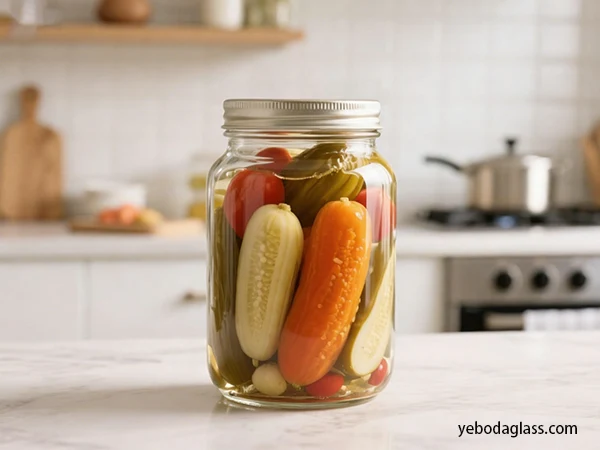
The Impact of a Pickle Jar Factory on Total Cost of Ownership
When sourcing packaging, many buyers focus exclusively on unit price. However, the real cost of working with a pickle jar factory extends far beyond the quoted price per jar.
A reliable pickle jar factory influences:
- Breakage rates during filling and transportation
- Warehousing and inventory requirements
- Brand presentation and shelf appeal
- Production efficiency and downtime
The factory is inefficient and generates invisible costs. Glass pickle jars with poor quality can either crack during hot-filled procedures, leak during transportation or can not pass seal integrity tests. Such problems result in the loss of products, money back, low brand reputation, and time loss. On the contrary, an expert pickle jar supplier offers uniform dimensions, consistent supply schedules and technical advice that promotes lean, foreseeable processes.
Major Cost Drivers within a Pickle Jar Factory
Knowing the motivation of pricing within a pickle jar supplier enables buyers to negotiate over the price with efficiency thus they are able to choose partners that bring real value and not a facade savings.
Quality of Raw Material and Purity of Glass
Jar performance depends on the purity of the material used in glass production which depends on silica sand, soda ash and limestone. Poor quality of the raw materials leads to brittle glass, visual stain and uneven thickness appearance.
Pickle jars of high quality manufactured using fine materials provide:
- Greater clarity to premium shelf display.
- Increased thermal shock resistance.
- Reduced breakage in filling and transportation.
Though the materials in higher grades are costly in the short run, they save waste and also enhance sell-through rendering them a more cost-effective option in the long-run.
Design, Automation and Production Efficiency of Molds
Individually manufactured molds are also a big investment. Nonetheless, a seasoned pickle jar supplier may make the most out of the moulds by altering the existing models or spreading the cost of the moulds across the high production levels. The modern plants employ automated machines of the IS (Individual Section) type which are able to produce thousands of glass jars an hour with a small number of defects. The high degree of automation decreases the cost of labor, enhances uniformity, and decreases lead times, which are eventually transferred to consumers.
Lightweighting and Structural Engineering
Glass weight has a direct impact on cost. Lightweighting—reducing glass usage without compromising strength—is one of the most effective strategies employed by advanced pickle jar factories.
A well-engineered jar that uses 8–12% less glass delivers:
- Lower raw material costs
- Reduced freight expenses
- Easier handling in production lines
Only a technically capable pickle jar supplier can achieve lightweighting without sacrificing durability or seal performance.
How Material Quality from a Pickle Jar Supplier Affects Long-Term Costs
Choosing the lowest-priced supplier often results in false savings. Low-quality glass jars are more susceptible to thermal shock when exposed to hot brine during filling. For example, saving $0.02 per jar on a 10,000-unit order saves $200. However, if poor-quality jars cause a 3% failure rate, the loss of product, labor, and downtime can far exceed those savings. This is why evaluating quality assurance systems is critical when selecting a pickle jar supplier.
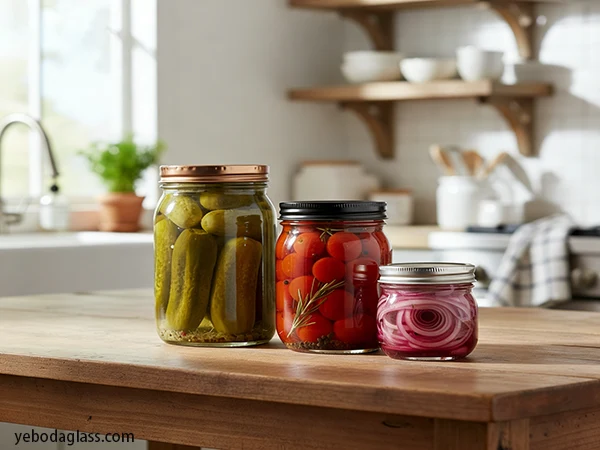
Strategic Sourcing and Direct Collaboration with a Pickle Jar Factory
One of the most effective cost-reduction strategies is working directly with a pickle jar factory instead of intermediaries.
Factory vs. Trading Company: Structural Cost Differences
Many suppliers are trading companies rather than actual manufacturers. They add margins without adding technical value.
Working directly with a pickle jar supplier allows brands to:
- Eliminate intermediary markups (often 15–30%)
- Communicate directly on technical specifications
- Access customization and design optimization
- Resolve quality issues faster
Trading Company vs. Direct Pickle Jar Factory
| Aspect | Trading Company | Direct Pickle Jar Factory |
| Pricing | Markup added | Factory-direct pricing |
| Customization | Limited | Full OEM / ODM support |
| Quality Control | Indirect | In-house QC systems |
| Lead Time | Longer | Shorter, predictable |
| Technical Support | Minimal | Direct engineering input |
Logistics Optimization with Your Pickle Jar Supplier
Glass is heavy and fragile, making logistics a major cost factor. A professional pickle jar supplier actively supports logistics optimization.
This includes:
- Pallet stacking optimization to reduce freight units
- Protective but minimal dunnage to avoid damage
- Container loading strategies to maximize cubic utilization
Factories experienced in exporting glass pickle jars understand how to mix jar sizes efficiently to avoid shipping empty space.
Negotiating Commercial Terms with a Pickle Jar Factory
Effective negotiation goes beyond unit pricing. Brands should discuss:
- Tiered pricing for future volume growth
- Flexible payment terms to improve cash flow
- Defect rate contract and compensation systems.
Explicit and organized contractual agreement enhances the partnership and shields both parties against losses that are not anticipated.
Create Value Long-term Value-Creation by a Strategic Pickle Jar Factory Partnership
The collaboration with a professional pickle jar supplier is not merely a unit pricing, but a serious investment into the stability of the operations. A specialized pickle jar supplier is a coherence between technical knowledge and the development of your brand, minimizing the unseen expenses and the instability of markets across the years.
Consistency and Reliability of performance
A reliable pickle jar manufacturer means consistency of composition of the glasses and the neck finishes. The consistency is important to:
- Operation Productivity: Reducing machine failures and line interruptions.
- Reduced TCOO: Glass jars of high quality ensure that the products are not spoiled, reworked or ordered as an emergency due to seal failures.
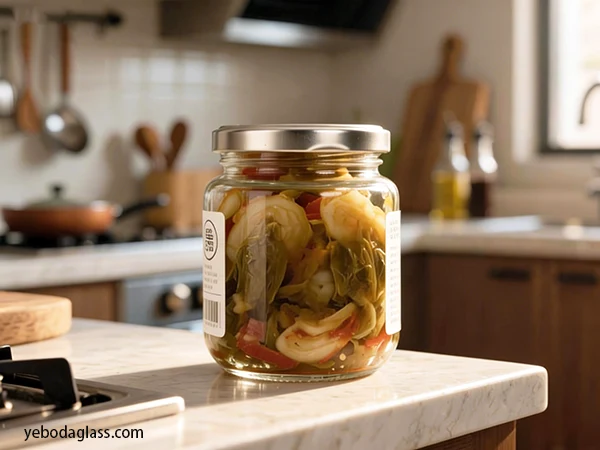
Supply Chain & Brand Equity
Your pickle jar supplier has guaranteed reliability that has secured your market position through:
- Stability of Supply: Stable production and buffer capacity can provide improved cash flow and seasonal spike responsiveness.
- Brand Trust: Defect-free glass is transparent and increases the product visibility and conveys high quality to the customer.
Enabling Scalable Growth
When you grow, an innovative pickle jar company changes to diverse regulations and models of distribution. This is enabled by the ability to offer scalable packaging solutions making the factory a long-term asset to help sustain global expansion.
Pickle Jar factory Risk Management, Quality Stability and Operational Assurance
Outside the direct savings of costs, a professional pickle jar supplier is an important part of minimizing the operational and business risk. In the case of pickle brands, the failure of packaging will not only cost the company jars but spoiled inventory, exposure to regulations, late deliveries, and a damaged reputation. A mature pickle jar manufacturing plant puts in place its systems to reduce these risks by maintaining stable production controls, standardized production specifications and active quality management.
Dimensional Consistency and Filling Line Compatibility
Dimensional inconsistency is one of the most disregarded risk factors in pickle packaging. Sealing failures or slowups in automated filling lines can occur due to variations in neck finish, thread depth or wall thickness.
An effective pickle jar plant has a rigorous dimension tolerance in all glass pickle jars to the extent that:
- Regular application of torque to closures.
- Consistent vacuum sealing in the processes of hot-fills.
- Fluid connection with quick filling machines.
This consistency minimizes downtime, rejected batches and safeguards general production output.
The fifth risk is Breakage Control and Reduction of Transit Risk
The glass jars in themselves are brittle and hence on handling and transportation, the chances of breaking are high. The pickle jar supplier in question is a professional manufacturer that deals with this risk on several levels:
- Impact resistance structural engineering.
- Similar thickness of walls to minimize points of stress.
- Export packaging that is long distance shipping.
The pickle jar supplier ensures finished products are well secured by minimizing the breakage rates during internal handling and international logistics and minimizing insurance claims, returns and customer complaints.
Market Adaptability and Long-Term Strategic Value of a Pickle Jar Factory
With the changing preferences of consumers, laws, and the channels of selling the products, brands need pickle jar supplier which can respond very fast and help the companies to develop their long-term strategies. Current packaging decisions will in most instances dictate the ease by which a brand will grow tomorrow.
Regulatory Compliance and Market Access Support
The law of food packaging is quite diversified. An effective pickle jar manufacturing plant knows and assists compliance with:
- Food-contact standards in the U.S. and EU.
- No lead-free and BPA-free glass specifications.
- Customs and regulatory audit documentation.
The pickle jar supplier provides the brands with the opportunity to save expensive delays, recalls, and barriers to market entry by providing the compliant glass jars and the corresponding certifications.
Scale: Customization and Brand Differentiation
With the increasing competition, packaging has become a major branding instrument. Peyton manufactures pickle jars in a prospective warehouse, these will be differentiated by:
- Individual glass shapes and embossing.
- Unique jar design on private label programs.
- Uniform branding of various SKUs and geographies.
Notably, the customization options will be scalable enabling the brands to retain visual identity without having to compromise cost control and supply reliability.
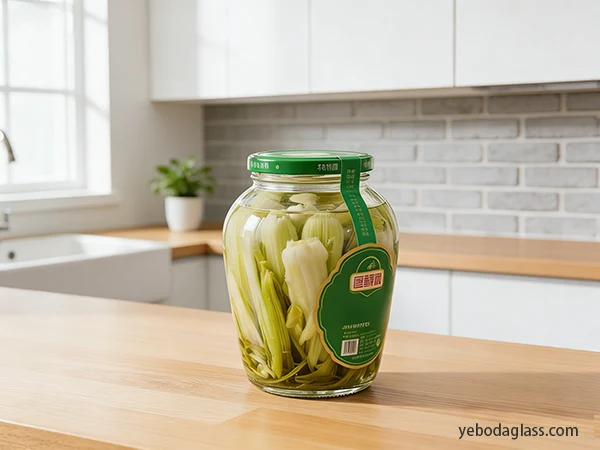
Favoring Development Within Retail, Foodservice and E-Commerce
The various sales channels have varying packaging requirements. The strategic pickle jar supplier can serve:
- High shelf appeal, retail ready glass pickle jars.
- Foodservice and bulk distribution jars.
- E-commerce shipping messenger bags.
Such flexibility in the channel enables brands to grow with confidence, and they will depend on a single and consistent packaging partner.
Conclusion
The cutting of costs in packing pickles is a multidimensional problem. Jar that may be the cheapest can be the most costly option in terms of breakage, leakage and inefficiency. Through direct access to a reputable pickle jar supplier the brands have access to factory-direct pricing, engineering support, logistics optimization and consistency in quality. This competitive alignment turns packaging a cost center to a competitive advantage- helping to support profitability, scalability and brand success in the long-run.
 EN
EN  FR
FR  DE
DE  IT
IT  ES
ES  CS
CS  PT
PT  NL
NL  PL
PL  TR
TR  AR
AR  KO
KO  JA
JA  ZH
ZH  RU
RU  HU
HU