
Introduction
This is some Choosing a reliable flip top bottle vendor is a decisive strategic action that significantly influences product quality, brand image, and the effectiveness of the business processes. The detailed report presented here, lays out a well-structured and diversified strategy for vendor selection, which is a perfect fit for application-specific needs, large-scale sourcing considerations, strict quality assurance standards, supply chain resilience planning, financial due diligence, and strong contractual protections. Companies can maintain a smooth supply of high-quality flip top bottles that precisely fit their needs and at the same time, lay down the foundation for a long-term, stable partnership with a reliable flip top bottle vendor by means of a rigorous evaluation of their potential partners.
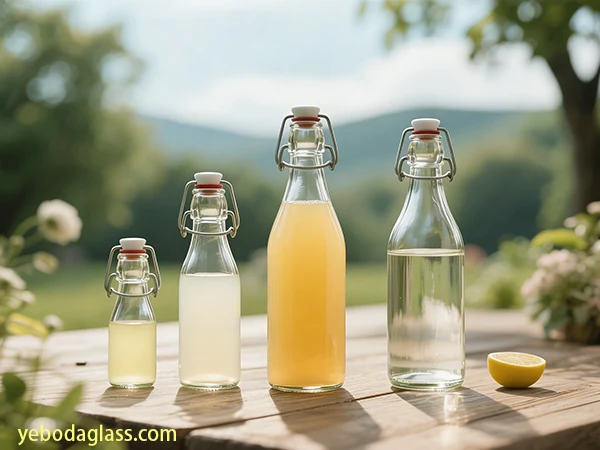
Defining Application-Specific Requirements for Flip Top Bottles
The type of materials, decor, and measurement of attributes used in a flip top bottle are primarily dependent on the utilization of the bottle. Understanding these intricacies is the very first step towards finding a vendor of a suitable flip top bottle.
Pharmaceutical and Food-Grade Applications
In the scenario of a pharmaceutical-grade or food-grade application, the flip top bottle supplier must not only take care of the safety and compliance of the product but it has also be able to demonstrate them.
- Pharmaceutical: Closures should meet very strict standards such as USP Class VI for non-reactivity and also require full material traceability. The seals have to be absolutely airtight so as not to allow for moisture and microorganisms to enter. For example, child-resistant features (CPSC/ISO 8317) and tamper-evident characteristics should be there to assure patient safety.
- Food-Grade: Materials (PP, HDPE, PET) have to be certified both by the FDA and EFSA. Production should be carried out in sterile environments (e.g., Class 100,000 cleanrooms), only virgin resins should be used. Strict QC, including chemical migration tests, should be in place to guarantee food safety.
Beverage, Cosmetic, and Industrial Needs
Different markets impose distinct functional and aesthetic demands on the flip top bottle vendor.
| Application | Key Material Requirements | Essential Functional/Safety Features |
| Beverage | PET, Aluminum, Glass Bottles | High recyclability, superior barrier properties (for carbonation), shatterproof (PET) |
| Cosmetic | Safe, non-contaminating polymers | Aesthetics (customizable colors/finishes), durability, controlled dispensing, tamper-evident seals |
| Industrial | HDPE, PP, Specialized Plastics | Durability, chemical resistance, UN-rating (for hazardous substances), secure interlocking fits |
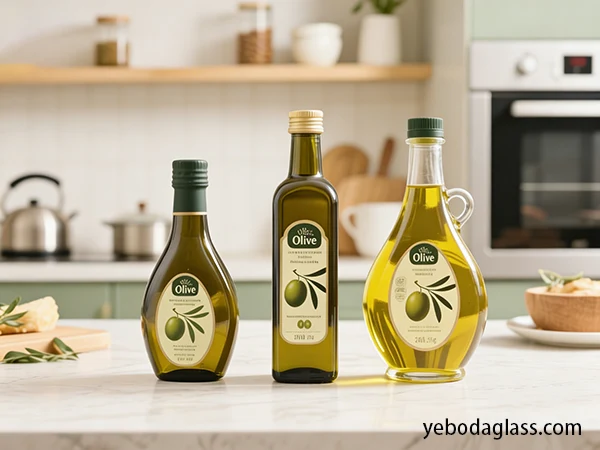
For beverage packaging that is just a bit different and more luxurious or artisanal in nature, one can think of the glass flip-top bottles from Yeboda as a very good option to stand out. Yeboda is a flip-top bottle vendor that focuses on quality and eco-friendliness, so it makes sense that their glass flip-top bottles are made of top-notch, mostly recycled glass. The signature closure of the product, which comprises a strong wire bale and a durable rubber or silicone gasket, ensures that the container is sealed tightly and that it doesn’t leak. This design feature is instrumental in the retention of the gas and therefore the freshness, which is a perfect match for companies that are looking for reliable glass bottles suppliers for craft beverages and want to use sustainable packaging solutions.
Dominant Materials and Sustainability
The substances that are utilized in a product do not only define its functioning but also the product’s influence on nature. A flip top bottle vendor who, by the use of top-notch, recyclable materials, really shows care for the environment, would be a great supplier to choose.
- Major Components: In most cases, polypropylene (PP) is chosen for its resistance to chemicals and durability. The material of a squeeze bottle may be polyethylene (PE) with HDPE (hard, strong) and LDPE (flexible, impact resistant) properties.
- Sustainability: Vendors are required to carry out the design principle of mono-material (e.g., PP cap on a PP bottle) to facilitate the recycling process. The issue of offering bio-based plastics along with Post-Consumer Recycled (PCR) materials is very important if PCR materials are correctly reprocessed into food-grade materials.
Strategic High-Volume Sourcing for the Flip Top Bottle Vendor
It is very important to align the selection of the flip top bottle vendor with the large-scale annual volume requirements, not only for the optimization of the costs but also for the consistency of the supply.
Capacity, Cost, and Quality Consistency
The primary concern of the manufacturing of high-volume orders is the capability of the flip top bottle vendor.
- Capacity & Economics: The vendor should be able to manufacture several hundred thousand units
- each day. Cost savings of a significant proportion (normally 5-20%) can be achieved through volume discounts. Large-scale procurement calls for strategically planned tiered or threshold pricing thus optimizing the expenditure.
- Quality Consistency: From the point of view of a flip-top bottle vendor, quality must be consistent over the high volume runs. This entails the use of modern, automated systems and exact material handling by the manufacturers, thus assuring that materials are uniform, seals are safe, and pressure resistance is at the right level for all the batches.

Supply Chain Resilience and Inventory Management
One of the attributes of a reliable flip top bottle vendor is that they provide logistics that are resilient and come up with progressive solutions for inventory.
- Reliable Delivery: The delivery on time is the essence, as the delays bring about higher operational risks. The vendor needs to provide evidence of his ability to meet the demands for volume, quality, and time, hence, there will be no discontinuity even if there are disruptions in the supply chain.
- Advanced Inventory: Such solutions as Vendor Managed Inventory (VMI) or consignment, under which a flip top bottle vendor is responsible for stock levels, may greatly lower the buyer’s carrying costs and assure the availability of the product. The key to efficiency is integrating material supply with automated reorder points and real-time visibility tools.
Long-Term Partnership and Risk Mitigation
Strategic purchasing is not just about short-term contracts as it requires one to look further.
Long-Term Agreements: Directing attention to complete agreements that entail elements such as price stability, volume flexibility, quality assurance, and continuous improvement. These agreements should also feature Key Performance Indicators (KPI) with the corresponding penalties or incentives.
- Supplier Diversification: To lessen the risks that come from reliance on a single source, the primary, the secondary and even the tertiary flip top bottle vendor in different regions of the world may be a solution to supply chain protection against the unexpected disruption.
- Proactive Auditing: The backbone of a stringent quality control system is frequent inspections of the production sites of the flip top bottle vendor and the in-depth examination of their own internal quality management systems.basic, sample markdown.
Quality Assurance and Compliance from the Flip Top Bottle Vendor
A dependable flip top bottle supplier guarantees product integrity through stringent quality assurance measures.
Certifications and Standards
Main suppliers observe ISO 9001 (quality), ISO 14001 (environment), ISO 45001 (safety), as well as food/pharma standards such as ISO 22000/FSSC 22000 or FDA 21 CFR. Besides that, it is equally important for the chemical industry to be REACH and RoHS compliant.
Advanced Testing and Process Control
Top-tier producers of flip top bottles engage in:
- Leak detection methods (vacuum, pressure decay, seal integrity)
- Computer Vision & AI for identifying less obvious defects
- Statistical Process Control (SPC) to supervise output and lessen product variation
Geographical Sourcing & Supply Chain Resilience
Whether to buy from a domestic or an international flip top bottle vendor is a question of weighing cost, lead times, and supply chain risks. 4.1 Global Sourcing Vulnerabilities
- Economic volatility: Scarcity of raw materials, sudden changes in prices
- Logistical disruptions: Congestion at the port, irregularity in the freight
- Geopolitical/regulatory risks: Tariffs, sustainability mandates
- Cybersecurity: Digital supply chains need to have strong security
Mitigation Strategies
- Have supplier relationships in various locations and perform risk evaluations
- Increase openness to operations with IoT, RFID, and real-time tracking
- Engage specialized freight forwarders and 3PL providers for logistics and contingency planning
Vendor Due Diligence and Financial Stability
The financial situation of a prospective flip top bottle vendor serves as the most essential factor that points to his/her long-term stability, capability to attract funds and endure challenges of the market.
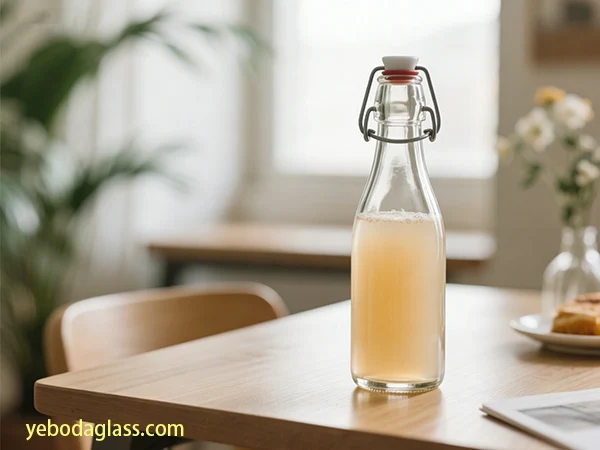
Assessing Financial Health of the Flip Top Bottle Vendor
Extensive financial inspection is what creates the foundation for a partnership that is not only tactical but also mutually beneficial.
- Key Financial Ratios: Investigate the company’s liquidity (Current Ratio, Quick Ratio), solvency (Debt-to-Equity Ratio), and profitability (Gross Profit Margin, Net Profit Margin) through main financial ratios. The presence of a low current ratio or a high debt-to-equity ratio indicates that the company is exposed to a greater financial risk.
- Cash Flow: Concentrate on cash flows from the operating activities; if they are negative for a long time, it is a very serious warning sign that the business model may not be viable without additional outside financing.
- Creditworthiness: Independently verify credit grants through D&B Reports, including the PAYDEX Score (payment history) and the Failure Score (likelihood of business failure).
Financial Red Flags and Investment Capacity
The key to prevention of supply disruptions is that very moment when you can identify financial distress.
- Red Flags: Negative credit ratings, habitual late payments to suppliers, unstable revenue, losing profit margins, and frequent turnover of key management should be carefully monitored for signs of trouble. Also, the risk of overdependence on a handful of major customers (customer concentration) as a source of business continuity can be alarming.
- Operational Reliability: Vendors with sound financial status in the flip-top bottle industry are the ones who can make capital expenditures for the needed operational improvements–new automation, AI integration, capacity enhancement–which will directly result in lower costs and better quality for the buyer. Such financial stability assures that the supplier is less susceptible to upheavals and more inclined to maintain the relationship for a longer period.
Negotiation and Contractual Safeguards
SafeguardsIn order to secure a dependable relationship, obtaining it through the negotiation of the terms and then by setting up strong and clear contractual safeguards with the flip top bottle vendor is necessary.
Major Contractual Components and SLA Indications
The contract for the supply shall be detailed and goal-oriented as to the performance.
- Fundamental Clauses: The services scope, payment terms, compliance requirements, confidentiality, and termination conditions should be explicitly outlined in the agreement. To avoid legal disputes, the contract has to employ clear language.
- Service Level Agreements (SLAs): It is important to implement quantifiable, obligatory metrics for the flip top bottle vendor. Some of them are:
- On-Time Delivery (OTD): Very high goals (e.g. 98.5%) are of great importance.
- Order Accuracy: The right products and quantities are delivered.
- Quality Acceptance Rate: The amount of units that meet the inspection criteria.
- Overall Equipment Effectiveness (OEE): It is a measure of how productive the manufacturer is.
Fines, Guarantees, and IP Protection
The agreement between the two sides should feature the non-performance outcomes and the measures taken to secure the proprietary assets.
- Penalties and Remedies: SLA breaches should lead to a financial burden, e.g. through liquidated damages or service credits. In addition, indemnification clauses may be used to ensure the buyer’s protection, e.g. against lawsuit costs, as a result of vendor breaches or defective products.
- Intellectual Property (IP): If the bottle is of custom design, the contract should specify who owns the various Design Patents (ornamental appearance), Utility Patents (functional closure), and Trade Secrets (proprietary processes) and be responsible for their protection.
- Warranty Provisions: The introduction of a strong Express Warranty that explicitly states that the products will be defect-free and in total conformity with the specifications, with the scope, duration, and remedies (repair, replacement, refund) clearly outlined, is a good idea.
Emerging Technologies and Sustainable Sourcing
The vendor with a forward-looking perspective integrates not only the new materials but also the new processes in order to be more reliable and to provide the client with more value in the long run.
Renewable Materials and Barrier Technologies
Sustainable supply is a must if the supply chain is to be future-proofed and must include not only the adoption of renewable materials but also advanced functionality.
- Sustainable Materials: The priority should be the following: Recycled PET (rPET), GRS-certified Recycled Aluminum, and Bioplastics (PLA, bio-PE), all of which are carbon footprint friendly. Polyethylene Furanoate (PEF) is a new generation bio-based plastic that has better barrier properties than a conventional plastic.
- Advanced Barrier Technologies: You should be able to tell that the vendor is using advanced methods to lengthen shelf-life if he uses Bio-based Barrier Coatings (where lignin/cellulose is used instead of fossil-based films) or SiOx Coatings on PET, which not only enhance the gas barrier properties but also make the material recyclable.
Innovative Bottle Designs
A strategic flip top bottle vendor might realize that the adoption of certain materials is not enough and thus might offer novel sustainable designs made of conventional plastic or other materials.
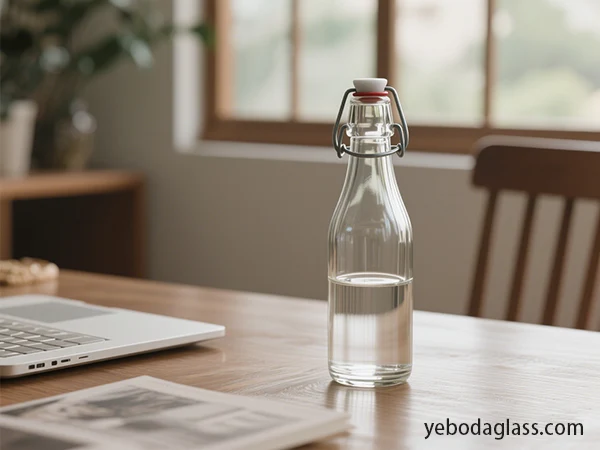
- Glass Bottles with Swing Tops: Glass swing-top bottles feature not only a high degree of reusability and sustainability but also the great potential of their strong, airtight seals as being the perfect way of preserving carbonated beverages as well as other liquids that require an excellent barrier.
- Digitalization: Smart caps may soon be the norm in the industry, where they will be able to provide consumers with, e.g., real-time temperature info and anti-counterfeiting features. This is a reflection of consumer demand for functionality and safety.
Conclusion
The right choice of a flip top bottle vendor cannot be merely based on the initial product pricing but rather needs a comprehensive, due diligence-driven process. Businesses will be able to build strong long-term collaborations if they thoroughly assess the potential partners in terms of their application-specific capabilities, high-volume operational excellence, verifiable quality assurance standards, robust financial stability, and detailed contractual commitment. Besides that, adopting emerging technologies and sustainable practices is another way to make sure that the chosen flip top bottle vendor is not only the one who can continuously offer high-quality flip top bottles but also a sustained competitive advantage in the marketplace.

 EN
EN  FR
FR  DE
DE  IT
IT  ES
ES  CS
CS  PT
PT  NL
NL  PL
PL  TR
TR  AR
AR  KO
KO  JA
JA  ZH
ZH  RU
RU  HU
HU