
Introduction
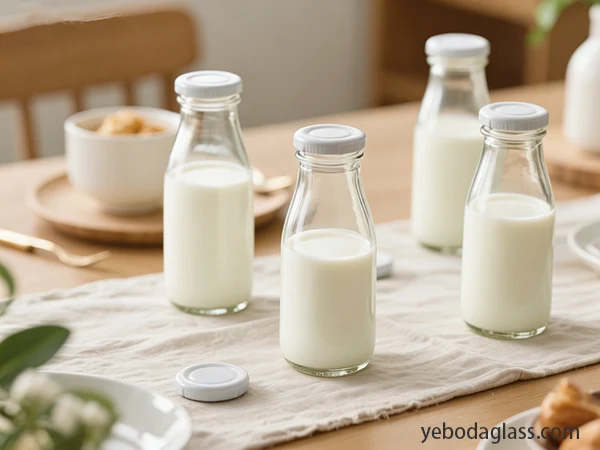
Milk bottle customize is quickly developing as it is influenced by consumer preference to experience something different, function better, and be more sustainable. Nowadays, the customization of the milk bottle extends well beyond visual differentiation to include everything related to the material innovation (long shelf life, light protection), the shape of the milk bottle customization (easy to use, better brand recognition), the modernized branding, and intelligent functionality (traceability, communications with consumers). Yeboda, which is a manufacturer that focuses on precision mold making is determined to design distinct bottle designs. Our main products are high-quality glass and green materials, superior labeling and printing technologies, and smart packaging to attain traceability and interaction with consumers. We facilitate mass production and control the quality strongly, and assist brands to save money, be more attractive on the shelf, and use environmentally friendly packaging. The intricacies of milk bottle customization in these locations will be explored in this report.
Issues Unique to Stakeholders with Milk Bottle Customize
Individualized milk bottle solutions pose various problems to the manufacturer, branding and final-consumers across the value chain.
Manufacturers’ Challenges
The manufacturers undertaking milk bottle customization projects experience high obstacle in scalability of production and sourcing of material. One-off molds need a large start-up capital usually tens to hundreds of thousands of dollars, which prevents small and medium manufacturers. It is not easy to scale the niche designs and keep its efficiency especially in small production batches. The sourcing of materials is an added complication. Having a constant quality in terms of thickness, size and branding elements is essential to prevent inefficiencies and loss of products. The use of specialized materials that have a higher barrier or UV-resistant rate puts strain on the supply chain, and the necessity to incorporate bio-based or recycled plastics would require new compliance procedures and a lot of testing.
Brands and Marketers Problems
Designing new glass bottles and marketing them is a matter of innovativeness and cost effectiveness as well as government regulation. Tailor-made shapes enhance brand equity at the expense of more tooling and production. Making things easier to consumers, ergonomic improvements complicate the manufacture. Of significant concern is regulatory compliance and especially with recently changing food contact material (FCM) regulations like the EU PPWR 2025/40. Specific labeling requirements as well as dairy also require durable solutions with legible characters. New materials come with new risks and lifecycle analysis and compliance verification is the key.
End-Consumers’ Challenges
To the consumers, personalized milk bottles have to be simple to open, pour and close. Geometries of complexity can undermine usability and disrupt automated filling or handling systems. There is the safety issue about the movement of chemicals through new materials that must be communicated and regulated openly. Recycling and disposal are an issue in instances where the personalized bottles are mixed with various materials. Poor recycling facilities can make recycling education on the importance of proper disposal to consumers more significant.
Complexities of Production That are Due to The Market Segment and Scale
The issue of customization has a lot of variability based on the scale of production.
Artisanal and Niche Producers
Small-scale producers do not have much money to invest in fully customized molds. This is because high initial investments make milk bottle customize solutions economically difficult resulting in more expensive per-unit-costs, or using semi-customized packaging. Small scale production is often incompatible with the typical high speed packaging systems, and regulatory requirements to aseptic level processing have a disproportionate impact on niche players.
Large-Scale Commercial Operations
Big dairies are exposed to other difficulties especially in dealing with supplier consistency in high volume operations. Automated lines will be upset by even slight changes in bottle specifications. Mass customization will need tight control in the engineering of the molds, strong control over suppliers and heavy investment on automation and AI-based quality control mechanisms.
Making the Jump: Automation, Modular Systems, and Contract Manufacturing
Small producers and large producers can be connected with emerging strategies. Automation facilitates quicker changeovers and shorter runs and modular bottle systems allow decreasing tooling costs. Milk bottle customize solutions can be reached with less capital investment as brands are able to access advanced equipment and expertise in a contract manufacturing.
Production Scale vs. Milk Bottle Customization Challenges
| Production Scale | Key Challenges | Impact on Milk Bottle Customize |
| Artisanal / Niche Producers | High mold costs, low volumes, regulatory burden | Limited design freedom, higher unit costs |
| Mid-Sized Brands | Balancing cost and differentiation | Partial customization, modular designs |
| Large-Scale Dairies | Supplier consistency, line efficiency | Mass customization with automation |
| Contract Manufacturing | Coordination and IP protection | Lower entry barriers for customization |
Design Material and Design Constraints Product Specific
The nature of dairy products has a more significant role in material and structural choices.
Viscosity and Rheology: Flow and Emptying Optimization
Dairy products that are of high viscosity may form residues in bottles causing dissatisfaction to the consumers. Rheological behavior is important in understanding the design of bottles and the process of filling when undertaking customized package designs.
pH Levels and Material Compatibility
PET is usually compatible with milk, although flavored dairy items and plant-based versions provide broader pH ranges. These differences make it harder to choose materials when making milk bottles in customization programs and might necessitate the use of different polymers or finishes.
Light Sensitivity: Light Insurance of Nutrients and Flavor
The exposure of milk to light negatively affects its nutritional value and taste. Bottles that are customized usually need to include UV-blocking or opaque product like amber glass, UV-resistant PET, or pigmented plastics with titanium dioxide (TiO 2).
Oxygen and Moisture Barriers: Increasing Shelf Life
Poor oxygen transportation (OTR) is fundamental in the maintenance of dairy quality. The multi-layered bottle design is very important in enhancing shelf life particularly of long life milk and milk powder.
Favor and Migration of Flavor
Plastic packaging can be used to absorb or transfer flavors, which negatively affects the product structure. In fluid milk applications, glass is the gold standard moisture barrier used in flavour protection.
Milk Bottle Customize Strategic Implications
The problems of customization have long-range strategic implications
Timelines and Costs of the Milk Bottle Customize Development
Tailor made bottle programs prolong development cycles as a result of testing of materials, mould design, and validation of compliance. There is an increased use of AI-based design tools to reduce the time of iterations.
Market Entry and Competitive Positioning
Milk bottle customize strategies will allow a high level of brand differentiation but should be well managed to prevent pricing drawbacks. Effective brands are able to articulate benefits in functional and sustainability.
Operational Effectiveness and Supply Chain Risk
Multiple customized SKUs are a burden on operations. Close relations with suppliers, high-quality tracking systems, and artificial intelligence based demand forecasting contribute to efficiency and minimizing risk.
New Technology and Solutions of the Future
Technology adoption and systemic innovation are the futures of milk bottle customize
Higher order Materials and Bio-Based Alternatives
Biotics and biodegradable plastics will help achieve sustainability targets though they have scaling and performance issues. Environmental benefits can only be validated by lifecycle assessments.
Design and Quality Control by AI
AI and machine learning work towards quickening the design of bottles, allowing quality to be predicted, and also decreasing the level of defects due to automated inspection.
Intelligent Packaging and Customer Interactions
QR codes, NFC tags, and connected packaging improve traceability and consumer engagement, and AI allows taking actionable insights on the basis of collected data.
Reusable Systems and Circular Economy Models
Reusable packaging systems need solid logistics and consumer engagement but are well-adjusted to regulatory and sustainability trends.
Conclusion
The milk bottle customize is an intricate matter that needs a proactive approach. Dairy brands can produce more functionality, sustainable, and economically viable milk bottles with the help of advanced materials, AI-based design, smart packaging, and the concept of a circular economy. The future of milk bottle customize will require cross-industry cooperation and constant innovation.
 EN
EN  FR
FR  DE
DE  IT
IT  ES
ES  CS
CS  PT
PT  NL
NL  PL
PL  TR
TR  AR
AR  KO
KO  JA
JA  ZH
ZH  RU
RU  HU
HU