
Background
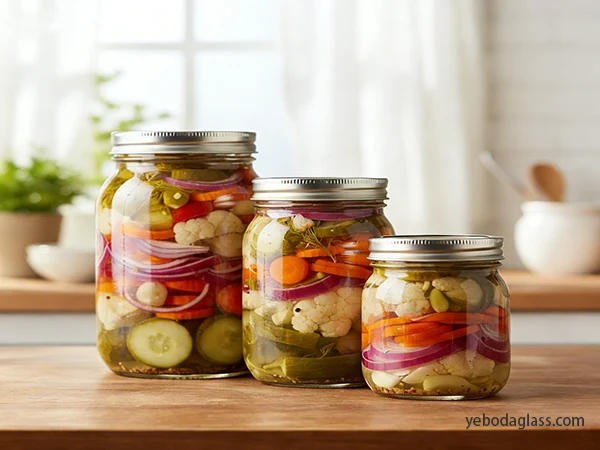
Yeboda as an expanding pickle jar factory partner was contacted by a Vietnam based pickle jar brand specializing in fermented vegetables to sell to the domestic and international market. In their quest to venture into the Southeast Asian market they needed a very strong, stylish 750ml pickle jar with a personalized embossed logo and an air tight fermentation lid. PolskaSpices decided to do business with Yeboda due to our reputation as a dedicated pickle jar factory that could handle large volumes of production without compromising on the high standards of food safety standards, demanded by the European standards.
Challenges
A few months after the first pilot run, the client experienced two major challenges:
- Constant Mold Production: Although there was standard sterilization, mold grew around the inner rim in pickle jars within 2 weeks of shelf life.
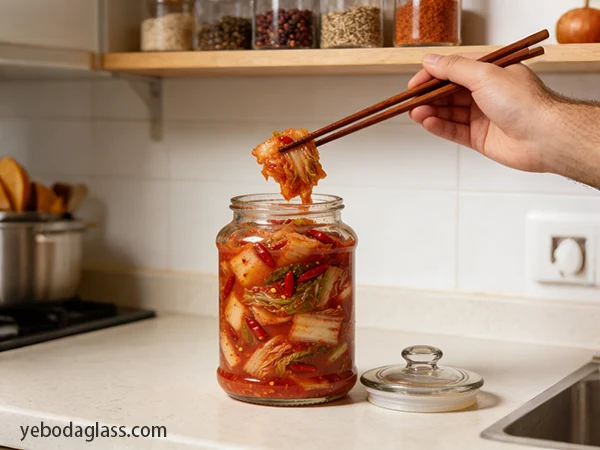
- Failure to seal under Pressure: Fermentation process naturally produces gas; jars with some leaks sent the gas escaping or warped the seals, endangering the safety of the product.
Cause Analysis
A deep-dive audit of the production line and the process of filling of the client was carried out by the Yeboda engineering team. We determined the fundamental problems:
- Micro-Porosity in Glass Rims: On the rim of the jar, microscopic abnormalities were observable which were trapping organic residues of brine that formed a breeding ground of mould which could not be reached by normal washing.
- Lid Liner Incompatibility: The initial silicone gaskets were too firm that they did not vent in the CO2 release stage of fermentation.
Solution
Yeboda introduced the two-level technical intervention:
- Precision Fire-Polishing: This was an additional fire-polishing step added into the production process. We melted down the top surface of the rim in high temperatures, to form a smooth surface, the liquid-smooth, which removed micro-pores.
- Dual-Valve Gasket Design: Our lid liners have been redesigned with a food-grade, high elasticity silicone with a one-way microscopic venting route. This ensured that the gases of fermentation were able to escape without the entry of oxygen (and mold spores).
Results
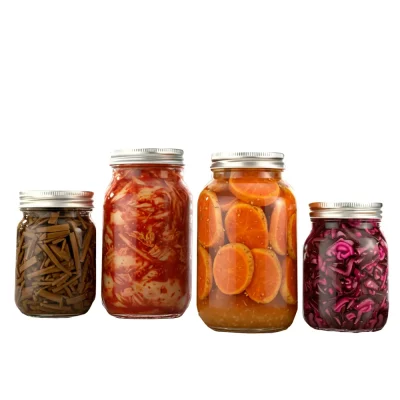
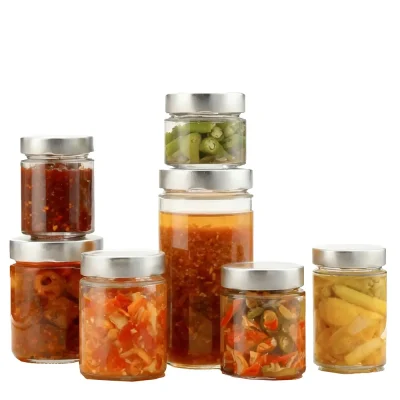
The outcomes were drastic and instantaneous. Following the introduction of the new designs, Vietnam also achieved zero percent defect rate in terms of molds in the following three shipments. The custom-embossed jars were an aesthetic success in the stores and the enhanced technology on the seals increased the shelf life of their products by six months. Currently, Yeboda is the only international collaborator of the Vietnam high-end line of fermented glass.
 EN
EN  FR
FR  DE
DE  IT
IT  ES
ES  CS
CS  PT
PT  NL
NL  PL
PL  TR
TR  AR
AR  KO
KO  JA
JA  ZH
ZH  RU
RU  HU
HU