
Introduction
In the current competitive consumer environment, where everyone is hyper competitive, brands are ever out to find a new innovative method to get the attention, build on loyalty and sales. Spice jar customize solutions have become one of the most effective strategies and the brands distinguish themselves with the help of the packaging that is both functional and beautiful and tells the story of the brand. In contrast to generic packaging, the use of personalized spice jars can help to transform the mundane containers into the formidable branding resources. Brands can have the perceived value by using customized materials, shapes, and clever features of functionality, which enhances user experience. Consequently, spice jar customize is no longer an aesthetic tool but has turned into a tool of positioning in the market and a future brand development. Yeboda being a professional manufacturer of glass jars offers a good platform to advanced projects of customize spice jars. Yeboda spice jars are made out of high clarity, food grade glass that is very chemically inert meaning that it preserves the flavor and is safe over time to the spice. In addition to material quality, Yeboda has a flexible mold development, consistent dimensional tolerances and scalable production capacity which is important to any brand in need of a reliable solution to customize spice jars. Starting with the classic round spice jars up to square, hexagonal or custom-profile, Yeboda is able to facilitate brand differentiation and still maintain manufacturing efficiency.
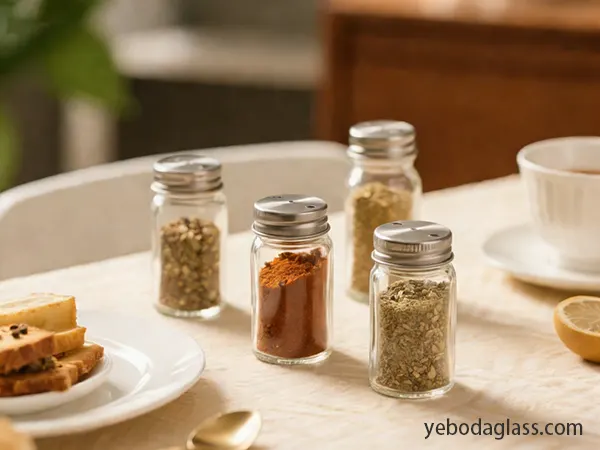
Material Designs and Form Archaeology of Contemporary Spice Jars
One of the most powerful options in the spice packaging lies in material choice. It influences the preservation of products, shelf impression, sustainability and regulatory image.
Glass Jars as the Base Packaging Medium
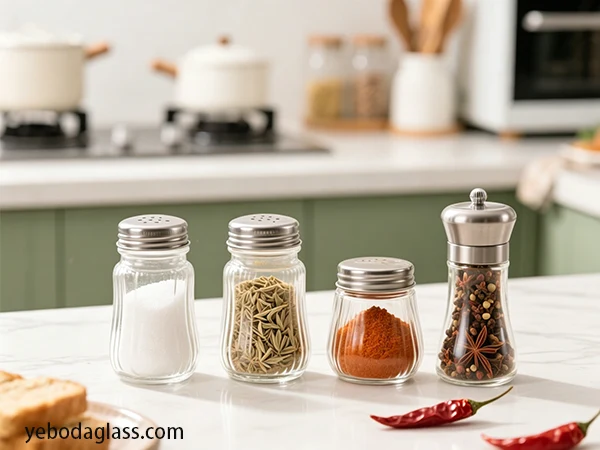
Glass jars still prevail in high-end and middle-to-high-end spice markets of all of the options. Glass has unsurpassed merits: it is non-reactive, oxygen or moisture-free, can be recycled without loss of quality, and is transparent to the eye- thus, the color and texture of spice can also be incorporated into the charm of the product. The bases of modern spice jars are getting thickened and the shoulders are being reinforced as well as the neck finishes optimized to enhance the life of that spice jar in transit and repeated usage at home. Such structural improvements are particularly necessary in refillable spices jar systems and long life product lines.
Surface Finishes and Operative Coatings
In addition to the choice of raw materials, surface treatment is becoming an increasingly important differentiation aspect. Glass was frosted, gradient coloring, matte finish, UV blocking coating does not only beautify the shelves, but it also helps in preventing light sensitive spices to degrade. In the case of sustainability-oriented brands, light glass engineering and recycled glass are useful to lower the carbon footprint without an apparent change in perceived quality, which is gaining more and more significance in packaging decision-making.
Shape, Ergonomics and User-Centered Design
The interaction with consumers in physical terms which is the form of the spice jars has a direct impact on the usability and emotional response.
Psychological Effect of Jar Shape
Rounded spice jars are also likely to be associated with a feeling of warmth, tradition, and ease of access, so they can be used in home cooking and heritage brands. Square or rectangular jars indicate efficiency and modernity which is usually favored in the minimal or professional spice collections. The tall and slenderness of profiles make shelves visible and give an impression of premiumness and streamlining.
Ergonomics and Everyday Use
Ergonomics, including the comfort in grips, a balance of weight, and the ability to work with one hand, are becoming the primary focus in the design of spice jars. Poorly designed spice jars may annoy the users, intuitive dispensing and easy resealing will make them reuse it again and be loyal to the brand. The controlled-pour opening, multi-function lids, and stable base are some design elements that make spice jars passive containers transformed into convenient tools of the kitchen.
Preservation Performance and the Advanced Lid Systems
Although jars give it structure and visual identity, lid systems determine the functionality of the spice jars in the real world. To the consumer and the brand, the functionality of lids has a direct influence on retention of freshness, convenience, perceived quality and repurchase behavior. With the growing competition, highly developed lid engineering has turned out to be one of the main distinctions and not a secondary aspect. Technically, lid systems need to strike a balance between sealing capability, user-friendlyness, durability and fitment in automated filling lines. Branding wise, the feel and sound when opening and closing a lid help to build perceived quality and trust.
Fresh and sealed in airtight
The spices are very susceptible to moisture, oxygen, heat and ambient odors. Any form of exposure may lead to loss of flavour, clumping or decrease in potency. This is the reason why airtight sealing is one of the basic requirements of quality spice jars. Accurately molded lids with food grade liners, silicone gaskets or multi-layered sealing inserts provide a level of consistency in performance with high volumes of production. In the case of brands in the international marketplace, effective sealing can also solve the problems of long distance delivery, weather differences, and a lengthy storing time. Commercially, freshness control is reliable, minimized customer complaints, secured brand reputation, and promoted claims of extended shelf-life. The ability to seal performance is a functional and psychological asset as consumers tend to equate a firm and well-engineered closure with product safety and high quality.
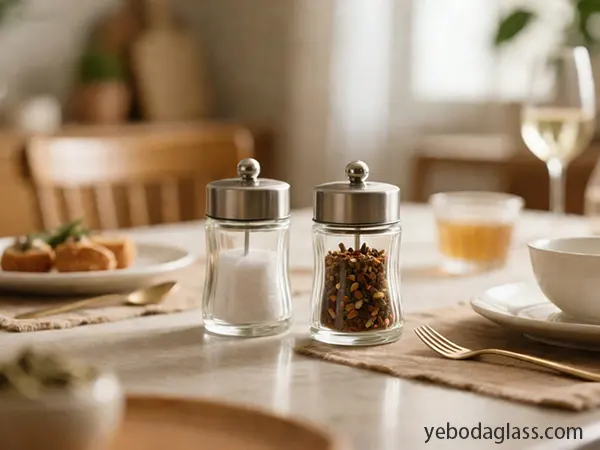
Built-in Grinders and Multi-dispensing set-ups
One of the most apparent functional additions to the spice packaging today is integrated grinder lids. These systems contribute the feel of freshness, authenticity, and culinary savvy to the consumer experience through enabling them to grind their spices at the point of usage. The grinding mechanisms used are also adjustable and this makes them even more user-friendly and satisfying. Multi-dispensing lids which have the capability of combining shaker, pour, and spoon-access features cater to the varied cooking preferences of one household. The designs minimize the requirements of more kitchen tools and enhance ease of use. As a brand strategy point of view, these type of lid systems provide a distinct on-shelf differentiation and can be used to premium positioning without modifying the core product formulation.
Labeling, Visual Identity, and Digital Integration
On top of the formation and functionality, labeling and visual communication is a determining factor in the perception of spice jars at the point of purchase. The packaging design is usually the leading stimulus in choices in categories in which the content of products can be readily observed. Good labeling systems strike a balance between clarity, beauty, durability and regulation compliance. In the case of spice brands, the labels should not be too thick since the product might be touched frequently, it will be exposed to oils and the humidity in the kitchen, and the choice of the materials and their finishing methods are of the utmost importance.
Improvements in Tactile and Visual Labelling
High-end label finishes would greatly help in improving shelf effect and sensory appeal. Embossed logos, three-dimensional typeface, micro-textures, matte finishes, metallic foils provide a sense of visual volume and touch. These elements enhance brand recognition and perceived value on smooth glass jars, which have contrast. Slim label designs that are done using polished finish will be specifically applicable in high quality and health conscious brands whereas strong graphics and colors overlays are effective in ethnic and fusion spice segments. Notably, the label durability should be in line with the visual ambition, whereby the brand is presented over the product lifecycle.
QR Codes, Traceability and Extended Storytelling
Digitalization turns spice jars into a two-way communication medium. QR codes and NFC tags help the brands to move the practice of telling stories past physical space, and provide access to recipes, sourcing transparency, sustainability efforts, and education on how to use it. Such prolonged interaction creates a sense of trust and an emotional attachment with the consumers even after the buying. In the case of exportation-based and luxury brands, digital traceability provides compliance and authenticity checks as well. With transparency as an expectation and a differentiator becoming a thing of the past, digitally enabled systems of labeling are defining competitive advantage more and more.
Market Segmentation and Industry Specific Packaging Strategy
The spice jars are used differently in various brand categories.
Gourmet and Premium Brands
Premium spice brands focus on heavy glass containers, a minimalist design and high-end materials of the lids metal or wood. These indicators convey artisanship, genuineness and uniqueness.
Health-Oriented and useful Brands
Brands that are health oriented are concerned with clarity, portion and preservation. Clear glass jars, accuracy in dispensing, and clean labeling are the additions to the trust and integrity of the product.
Ethnic and Cultural Cuisine Brands
The spice jars are the storytelling tools used in Ethnic cuisine brands. The heritage and authenticity is communicated through the color, typography, and symbolic design elements, and the consumers who are not accustomed to certain spices are educated through the packaging.
Strategic Elements and Brand Impact of Customized Spice Jars
| Design Element | Functional Value | Brand Impact |
| High-clarity glass jars | Flavor protection, visual appeal | Premium perception |
| Custom jar shapes | Shelf differentiation | Strong brand recall |
| Advanced lid systems | Convenience, freshness | Repeat purchase |
| Tactile labeling | Sensory engagement | Higher perceived value |
| Reliable manufacturer | Quality consistency, scalability | Reduced supply risk |
Conclusion
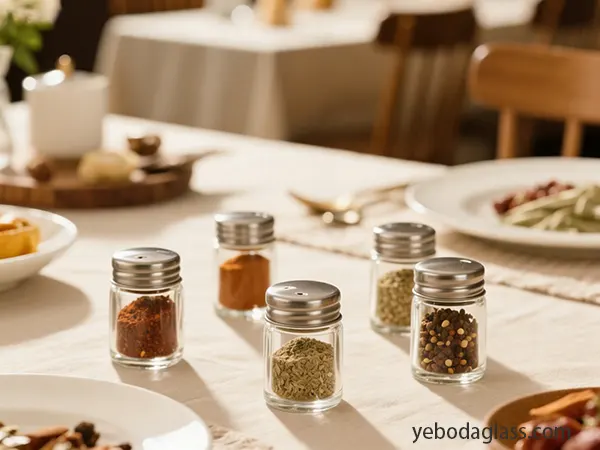
The spice jars are not just objects of passivity in the current consumer markets but are tactical brand property. By carefully selecting materials, designing ergonomically, innovating functions, and having stable manufacturing alliances, the brands can transform ordinary spices into product differentiations that are value-directed. Such manufacturers as Yeboda strongly contribute to this change, being the technical background needed to strike the balance between the creativity and scalability. With the increasing levels of competition and consumer demands, brands that invest in the well-implemented customized spice packaging will be at a better position to realize long-term shelf impact, brand loyalty and long-term growth.
 EN
EN  FR
FR  DE
DE  IT
IT  ES
ES  CS
CS  PT
PT  NL
NL  PL
PL  TR
TR  AR
AR  KO
KO  JA
JA  ZH
ZH  RU
RU  HU
HU